Wednesday, 3 July 2013

Wednesday Wishlist


The Sorted Boys - Vegan Curry


Embedded image permalink
My domestic goddess sister!
Whilst staying with my sister in London, we decided to hold a mini dinner party to try out this recipe we found from YouTube sensations The Sorted Boys. This bantering, lighthearted crew started off as just a bunch of friends swapping recipe ideas round a pub table, but have now escalated into not only Europe's largest cooking community on YouTube, but also the producers of two recipe books which promote fun, social, and simple cooking.

When I moved out of halls last year my sister gave me their first book 'The Beginner's Cookbook' - having tried out a number of their recipes, I find their simplistic, short instructions really useful and easy to follow, but I would say you need a slight knowledge of what you're cooking as a certain amount of improvisation is needed for some of those in-betweeny guesswork moments. Nonetheless, the combination of comfort food and healthier recipes make it perfect for the student - whatever mood you're in!

Embedded image permalink
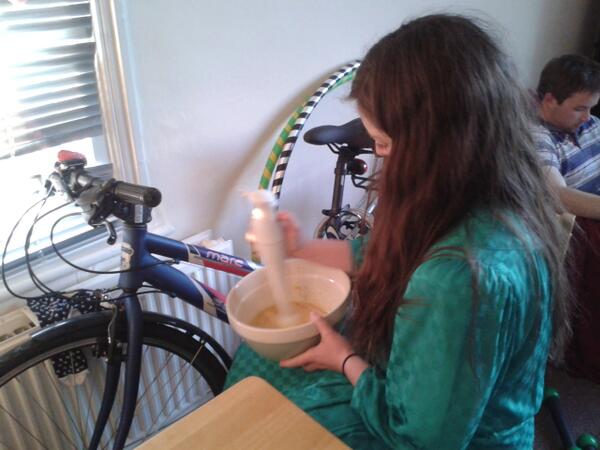
Casual bit of houmous blending
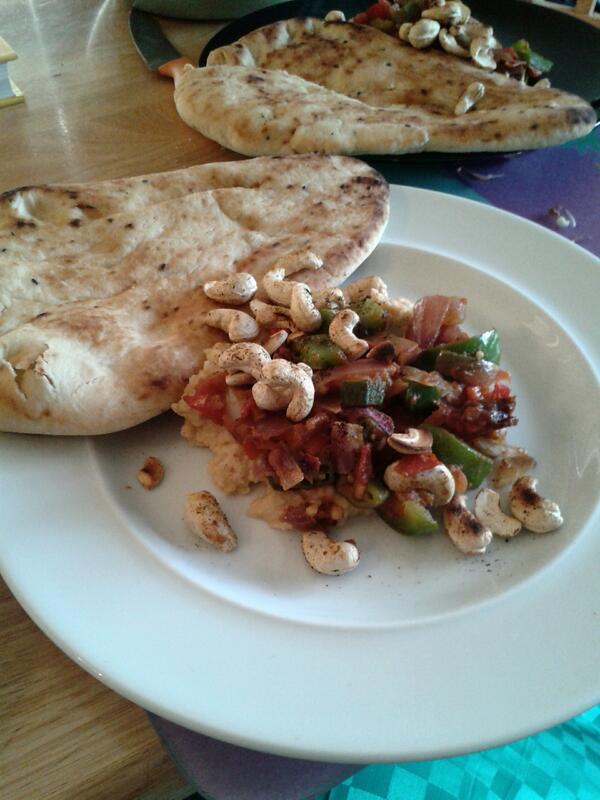
Having mentioned their focus on social cooking, this recipe really encompassed this - we all had bits and bobs to do, and could enjoy a chat and glass of wine at the same time! The recipe took no more than 20 minutes to make, and it was unexpectedly really filling and satisfying - the perfect guilt-free treat! We served ours up with mini naan breads, rice would also probably go quite well if you're not actually vegan/gluten free. For me, the best part was the houmous - I am never looking back to the shop bought stuff again!


Embedded image permalink
The finished product!

Make it now: Find the effortless recipe here, along with links to their books and YouTube channel, and hundreds more delicious recipes! Let me/the boys know how your cooking goes: @sortedfood @laraegood

Monday, 1 July 2013

Pride and Prejudice - Regent's Park Open Air Theatre

Emma, Sense and Sensibility, Northanger Abbey….you really can’t beat a bit of Jane Austen. When I saw this play version in Regent’s Park Open Air Theatre advertised, I could not resist. I booked tickets with my sisters for the next available performance, and loaded with crudités, homemade houmous, and a blanket, we excitedly made our way over there on Tuesday night.

Adapted for the stage by Simon Reade, and directed by Deborah Bruce, for me (and probably most of the audience) this production had a LOT to live up to. I am a massive Austen fan, and I find her novels are some of the only ones that film adaptations can really do justice to – assuming her satirical hilarity is maintained throughout. Everyone has their personal favourite, usually involving Colin Firth or Kiera Knightley. Personally, I’m in the Kiera Knightley boat – it’s become somewhat of a tradition to lie on the sofa on New Year’s Day in a less-than-healthy state and delight in the period costumes, the dancing, the sexily broody Mr Darcy, and obviously Kiera’s go-to ‘sticking-my-chin-out-to-convey-emotion’ face. But I digress, this is not a review on my favourite film (sob). However, it was necessary to express my extreme adoration for the film to convey my expectations, which were, it’s safe to say………………….COMPLETELY AND UTTERLY FULFILLED (nice bit of suspense there).

Hidden away in a corner of Regent’s park, we felt like we were walking into an enchanted forest. We’re talking gigantic trees delicately fitted with fairy and tea lights surrounding the stage in a semi-circle against a backdrop of a beautiful summer’s evening. The stage itself was circular, with a balcony in the middle. Much to my delight, it rotated with each scene change (and even during certain scenes), giving swift, unnoticeable transitions, and making sure each member of the audience got every perspective of the on-stage action.

Now onto the important stuff – the actual performance. I have quite an immense amount to say about this, mainly because I loved it so much, so to prevent this from turning into some sort of dissertation I’m just going to do a run down of the principle characters:

Mrs Bennett – Initially I was apprehensive, I wasn’t sure if I could deal with her shrillness and exaggerated acting for the entire duration, however you soon come to realise that Mrs Bennett cannot be played in any other way. The whole POINT of her is exaggeration, and Rebecca Lacey captured her insufferability and fickle nature absolutely perfectly. I did not stop laughing/grinning throughout the entire second half.

Lizzie – This Lizzie gave a fresh perspective to her, and I have a sneaky feeling perhaps more what Austen may have intended (obviously pure speculation, but ya know). She was less quietly stubborn and a bit petulant, and more headstrong and wilful, making her somewhat rapid transition from utter disgust to unconditional love for Mr Darcy slightly more understandable.

Mr Darcy – At the beginning, a tad too posh and stiff for my liking. Obviously he’s meant to be like this, but I felt a bit more humour wouldn’t have gone amiss, and his aggressiveness came across as slightly too vicious at times rather than endearingly tongue-in-cheek.

Mr Bingley – Undoubtedly, in any production he is always one of my favourite characters – it’s probably down to the way he’s written (bashful, nervous, slightly clumsy) so it would be hard to get him wrong. But I especially loved the subtle touches Rob Heaps gave to the character. Period adaptations so often get stifled and trapped in the age they were written – we all know that generic tone of voice we used to put on when forced to ‘perform’ (drone out) Shakespeare extracts at school – but the characters were not afraid to deliver the lines in the modern, casual way that we would speak today, outlining the absolute timelessness of Austen’s writing.

Mr Collins – Completely and utterly pantomime. But I loved it! His acting was so physical that you couldn’t help but laugh, and it was a happy relief from some of the slightly-too-long serious scenes (namely involving Catherine de Bourgh). His comic timing was completely spot on and, like Mrs Bennett, whilst playing the surface character Austen has created, he managed to leave enough space for the audience to infer his own self-satire – something I’m sure Jane would have been very satisfied with.

Mr Bennett – For me, the only downside of the production as a whole. His extreme switches between comical, happy, angry, depressed, and even slightly nihilistic were just a bit too much, they made him impossible to grasp as a rounded character and he didn’t really fulfil the constant, family figurehead that I was expecting.

Bennett sisters - Added that sense of hysteria which is so present in Austen’s satire of social climbing, small-village communities. Think Kardashian, but slightly less annoying and a lot more endearing.

All in all, I loved this – I was beaming from start to finish, and I was pleasantly surprised by the extent to which it actually made me laugh out loud. Its unforced and natural mixture of Austen’s setting, style and characters with a contemporary, updated view was completely graceful and reminded me exactly why I adore snuggling up with a cup of tea and an Austen novel so much.


Now….where’s a copy of Mansfield Park?

See it now: Get tickets here, we went for the cheapest, were on the back row right at the top and could see absolutely everything!

Friday, 28 June 2013

Life of Pi – Yann Martel

I’m extremely ashamed; I’ve committed the ultimate booklover’s faux pas: I saw the film of this BEFORE reading the book. I know. I’m ashamed. At risk of sounding like a broken record, I may have to reach for the whole ‘English Literature Student no time to read’ excuse again, as I did start this book before the film came out, but couldn’t resist settling down to this visually beautiful film with a  mountain of popcorn before finishing. I wouldn’t say I regret seeing the film first, but it is very, very different from the book. If you’ve seen the film, I can 100% guarantee that you should still read the book. Setting aside the incredible writing of Yann Martel for a second, the focus is completely different. I was convinced I knew the story, but each new chapter was a new surprise for me.
This is the story of Indian boy Piscine Molitor, who is the only survivor of a shipwreck, along with a Bengal tiger called Richard Parker who he survives in a lifeboat with for 227 days. If you’re not a ‘fantasy’ fan do not be put off by this seemingly unbelievable plot. I would never choose a fantasy novel, it’s never really been my thing, but Martel grasps this theory of believability so firmly that you can’t help but bob along with the novel without once questioning any of the incredibly implausible things that happen to Pi.
The story is famous for being about a boy living with a tiger in the middle of the Pacific Ocean; if you know one thing about the book, it will be that. So what was pleasantly surprising for me was how much focus there was on Pi’s life in Pondicherry beforehand. I am a sucker for colonial, exotic novels – The God of Small Things by Arundhati Roy is one of my all-time favourite books. I adore the effect the descriptions of the Indian culture and cities have on all senses: you can visualise the vibrant colours, smell the strong spices, hear the chatter and business of everyday goings on. This was not in short supply in Life of Pi, but the other thing that really captured me was the focus on religion and spirituality. If there was one thing that was in almost no way conveyed in the film, it was Pi’s constant belief and love for God. And not just one God - Pi is consumed by all the religions he encounters: Hindu, Christianity, Islam. For me, it is baffling that this is not included in the film more, because it sets the foundation for the entire novel, belief is what Martel constantly returns to, and is what ultimately saves Pi. This combination of the business of Indian life and Pi’s envelopment into completely varying cultures and religions contrasts brilliantly with the isolation and remoteness Pi experiences in the second half of the book.
What’s so different about this book from almost any I could possibly think of (and a complete departure from its film adaptation) is that it has no romance, or sexual love interest. Along with anyone else who’s seen the film, I was fully expecting descriptions of young Pi running around chasing Indian dancers…but this was not the case. The void that may be expected from this absence of such a strong novelistic convention is just not noticeable. Instead it leaves a space for a much more effective sense of the love Pi feels for his family, the animals, God, life, and eventually everything in his little lifeboat.
I would personally outline love and belief as the main points of the novel, although Yann Martel is reputably elusive and non-committal in his comments on his own writing. However the literal presence of an author (whether non-fictional or fictional) gives us readers at least some idea of the direction Martel is pointing us in – the observations in italics serve to stress a theme that Pi is to explore in the next chapter. Having said this, this direction is extremely loose and arbitrary – the book’s openness is part of its magnificent beauty, the ambiguous ending (no spoilers) and uncertainty of what is real and what Pi is imagining leaves you in deep discussion with yourself (and others) for a  long time after finishing the book. What I realised was that, ultimately, the desire for a concrete ending is completely outweighed by the journey you experience with Pi of beautiful writing and a beautiful, unforgettable story.
Greed Satisfaction Scale: I thought I knew the exact taste to expect when starting this, but I was utterly and pleasantly surprised by the extreme variation of flavours – completely contrasting but combined to create a perfect concoction. The mixture and disparity of tastes is sure to suit absolutely any palate, and the flavour varies with every return.
Read it now: I'm slightly peeved I can't find a copy without the film cover, but get it here or for a beautiful illustrated version, here

Wednesday, 26 June 2013

Wednesday Wishlist

On The Road - The Original Scroll Jack Kerouac

This week and last week I have been lucky enough to have the opportunity to do work experience in Michael Joseph, the commercial imprint of Penguin. Being able to listen in on discussions about up and coming authors and books (and sometimes being involved!) is completely invaluable and so interesting! Another perk of the job is all the books lying around the office which I have been taking advantage of at any point I can. Literally a book lover’s heaven. Michael Joseph does a lot of cookery, celebrity books, diet books and women’s fiction, some of which I will be reviewing soon, but here’s something I came across the other day from the actual Penguin general branch, and I personally think it’s pretty special…

I’ve actually got this as a present for someone who's a BIG fan so shhh…but you can get your own copy here. On the Road isn’t my typical choice of book, but seeing other people’s passion for it and understanding its importance in its own period and culture, ie the ‘beat’ generation, makes it one of those books you just HAVE to read - somewhat of a rite of passage for all travellers/writers/general free spirits. I’m not going to write a whole review on it, but this original scroll (Kerouac initially wrote it on a 120 foot piece of teletype paper in 3 weeks - pictured below) edition is a must have for both hard-core Kerouac fans and those trying something new – reading something exactly as the author wrote it with no interruptions or editing is always more exciting, and gives you that priceless sense of intimacy with the author.

Sunday, 23 June 2013

The Fault In Our Stars - John Green


My sister passed this book on to me and it has fast become my favourite book, I’ve since run around feverishly recommending it to anyone and everyone and have subsequently concluded that I am a serious late comer to this whole John Green obsession.

The Fault in our Stars was actually first released in January 2012. On the mere announcement of its title in June 2011 it shot to the top of both Amazon and Barnes & Noble bestseller lists. So clearly I have been rather slow off the mark. Forgive me, I’m an English Literature student - put simply, 30 weeks of compulsory reading a year. But the important thing is that I did finally get round to reading it, and it proved the perfect procrastination to revision for my 2nd year exams.

Written in the first person of Hazel, a teenage girl with terminal cancer, this book was always doomed to end in tears. And I have to admit, for me, it did. A whole 45 minutes of them. But despite its hopeless premise, this story remains unpredictable and truly gripping throughout.

Having been forced to go to cancer support group by her loving but suffocating parents, Hazel meets the effortlessly cool, exceedingly intelligent, philosophical, and obviously drop dead gorgeous (albeit slightly arrogant) Augustus Waters…..did I hear someone say Edward Cullen? I’ll admit, when I first started the book I really wasn’t into it, I did feel it was a complete Twilight type, which obviously I adored slightly too much when I was younger (who didn’t?), but in retrospect is a just a slightly shallow, badly written book with pretentious characters. At first I found Augustus and Hazel’s quick-witted banter similarly unrealistic and slightly irritating, but oh how quickly I realised how utterly wrong I was.

This book is not just a superficial adolescent, angsty love story; the cancer plagues the story in a tragic but engrossing way. You’re forced to simultaneously deal with the gritty reality of the constant side effects of actually living with cancer and the dark humour the characters are driven to find in their impossible situations. For me, cancer is no longer just this terrible ominous monster; it is also, for the characters suffering, a routine, an everyday life that they just have to contend with. Perhaps this is just the ignorance of someone who has been lucky enough never to have a direct experience with cancer, but I think John Green deals with it in an important way for any reader.


Whilst the cancer pervades the entire story, and is a constant, tense presence, it does not drown the captivating, endearing love story of Hazel and Augustus. At heart this book is a deliciously soppy-in-a-good-way tale that made me physically grin and smirk on behalf of Hazel in certain (most) parts. Augustus’ one liners made me feel all fluttery and nervous and I guarantee they will have the same effect on ANYONE. I’m not ashamed to say that I fell so utterly in love with him that, having conjured him up so visibly in my head, I was CERTAIN that I saw him across the street just a couple of days after finishing the book. Alas, it was not him, seemingly just a side effect of my post-TFIOS-depression period. Warning prospective readers: this period lasts a while. For me, this is the true sign of a brilliant, beautifully written book, when even after finishing, you can’t get the characters out of your head, and you physically miss them as if they were your best friends. The best consolation I had was a boyfriend called Gus I could pretend was the wonderful Augustus Waters, in a strictly non-creepy way….obviously. Perhaps a slighter better consolation for the rest of you may be the announcement of a film on the cards. Although I am slightly apprehensive, as we all are, of my new favourite characters being physically brought to life without me being in COMPLETE CONTROL, I am certainly excited to see how Hazel’s hilarious, philosophical, metaphysical observations will be brought onto the big screen. 

Greed satisfaction scale: I was left craving much more of these characters and feeling less than full, but in retrospect this is what the most talented of chefs strive for: the perfectly sized meal that doesn't fill you to that sickening level but leaves enough space to retain it in your memory for a long time to come.

Read it now: get it here